
Read more about Philip’s books and purchase below.


Published by St. Martin’s Press, an imprint of Macmillan. Available in paperback, hardback, and eBook at Amazon. Audiobook is available at Audible, Apple, and Google Play.
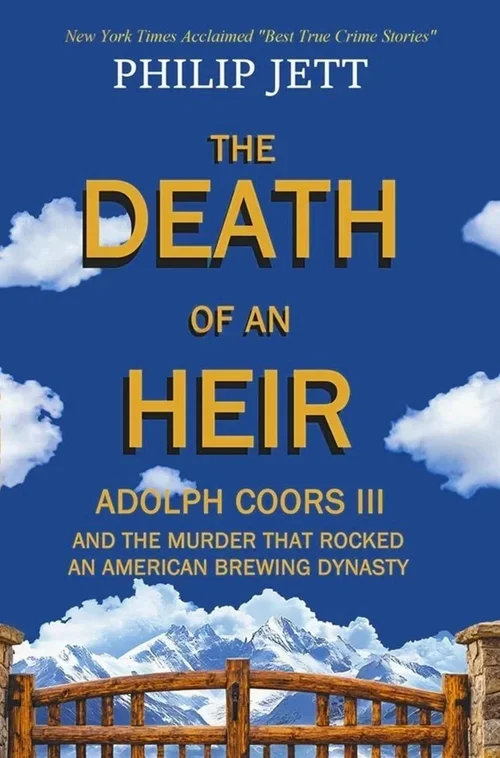
One of the most intriguing mysteries in U.S. criminal history comes alive decades later as the author sets the hunter and the hunted on a collision course in THE DEATH OF AN HEIR.
Adolph Coors III, eldest son and heir to the Coors fortune, kisses his wife Mary and their four young children goodbye and heads down Colorado back roads to the Coors brewery. He’s unaware that at the same moment, a convicted murderer and California prison escapee is leaving his Denver hideaway to set his two-year plot into motion.
Adolph Coors never arrives at the brewery. His frantic wife opens a ransom note the following day demanding half a million dollars ($6 million today) for her husband’s safe return. The ransom money is swiftly raised and Mary sits by the telephone anxiously awaiting further instructions, but they never come. Both the kidnapper and the kidnapped vanish.
The largest manhunt in U.S. history since the kidnapping of Lindbergh’s baby rushes into action. Air Force planes and helicopters search the Colorado mountains. Colorado state patrolmen and sheriff departments comb the countryside, interviewing potential witnesses, searching mines and caves, and following up leads. The FBI swoops in and identifies the kidnapper as the clever Joseph Corbett, Jr., the FBI’s newest Most Wanted. FBI Director J. Edgar Hoover makes a rare appearance on national television and announces that Corbett is the most wanted man since John Dillinger.
Despite tossing out an international dragnet by law enforcement, days turn to weeks and months without word from either Coors or Corbett. The grief-stricken wife is tormented by unrelenting silence and never recovers from the loss of her loving husband and the father to her children. What happened to the heir of the Colorado beer empire and his abductor? The Death of an Heir will unveil the mystery.


Distributed by Simon & Schuster in paperback and eBook.
On the morning of April 29, 1992, Exxon International president, Sidney J. Reso, left his home for the office. He stepped out to pick up the newspaper at the end of his drive as he did every morning. A van screeched to a stop and a large man wearing a ski mask and wielding a .45-caliber pistol leaped from the vehicle and grabbed Reso, shoving him into the back of the van. The female driver sped away. No one saw or heard anything, sparking the largest kidnapping investigation in US history since Patty Hearst’s abduction.

Available in hardback, paperback, and eBook wherever books are sold.
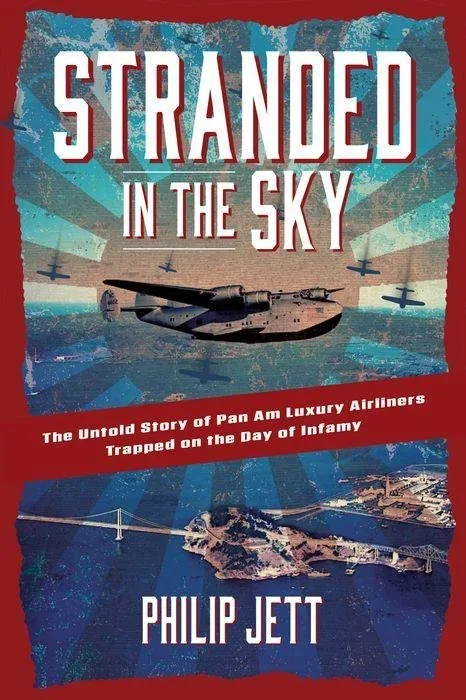
By December 1941, Pan American Airways System (Pan Am) flew international routes exclusively. Its scheduled routes doubled those of the ten largest domestic airlines combined. It also held the distinction of being the only airline in the world that traversed the Atlantic and Pacific Oceans. With Europe at war, wealthy and affluent passengers clamored to board Pan Am’s transpacific planes that were the largest and most lavish in the world. These “clippers,” as they were called, could carry a fortunate few to exotic destinations in the Orient and the Antipodes that included faraway and mysterious Hong Kong, Macau, Philippines, Singapore, Fiji, and New Zealand. As one passenger wrote home at that time, “Ah, life—it’s wonderful.”
That first week in December, three Pan Am clippers took off from the West Coast—the Pacific Clipper for New Zealand; the Philippine Clipper for Singapore; and the Anzac Clipper for Hawaii. A fourth, the Hong Kong Clipper, had just arrived in Hong Kong from Manila. The planes’ stewards tended to the passengers’ every need. After all, there was only one class on Pan Am planes—first class. They served slightly chilled champagne and cold beads of caviar and laid out creased linens and soft slippers. As the passengers relaxed, surrounded by the extravagance that their wealth or high-paying careers accorded them, they imagined the pleasurable exploits and exotic destinations that lay ahead of them—all unaware of the attacks being orchestrated by the Empire of Japan that at that moment would thrust the United States into another world war.
Soon, they learned over the radio of their predicament. Alone and unreachable, Pan Am crews and their frightened passengers were left with no choice but to make their own way across a dangerous Pacific Ocean, where neither land, air, nor sea could promise them safety from the attackers. They would all do their best to survive. Some did . . . and some did not.